Power Mapping
Power mapping is a visual tool for identifying key decision-makers and influencers to target for social change. It breaks down the landscape of power regarding a specific issue. It has been useful in the grassroots organizing context, but is also well-known in qualitative action research.
It typically involves answering the following questions:
- Which individuals or groups have the power to make or resist change?
- How much power does each of them hold?
- What kind of power do they hold? (financial, political, supply chain, diplomacy, etc.)
- What are the relationships between these actors?
The specific map will look different depending on the context. When identifying loci of power within an organizational context, the map often takes the form of bubbles representing each actor, with lines drawn between them to show relationships. When the loci of power are distributed geographically, the map is better represented as an actual map–locating each actor in the place where they operate, so that spatial relationships become visible alongside organizational ones.
The primary goal of this project is to develop a repeatable methodology for power mapping research at the CNTR.
Prototype
As our prototype for developing a repeatable research methodology for power mapping, we have identified and visualized the hidden power structures, key decision-makers, and labor-resource relationships behind AI systems.
We have:
- conducted qualitative research to identify key individuals, venture capitalists, corporations, and government bodies
- investigated the labor supply chain for AI data-labeling and sociopolitical implications of natural resource extraction for AI infrastructure
- translated complex organizational and geographical data into visual "power maps" that illustrate the loci and differentials of power
Learn more about the prototype in the recent CNTR News article by student researcher Cunyan Ma, “Where are the data workers behind AI?”
The Team
-

Cunyan Ma
Undergraduate Student in Social Analysis and Research -
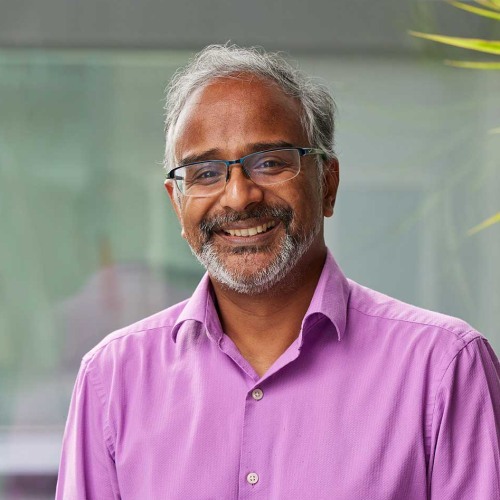
Suresh Venkatasubramanian
Director of the Center for Technological Responsibility, Reimagination, and Redesign, Professor of Data Science and Computer Science